
1981 (June 5) – AIDS Epidemic begins. The U.S. Center for Disease Control reported the first cases of a rare lung disease, which would be named AIDS (Acquired Immune Deficiency Syndrome) the following year. There were a total of 583,298 U.S. men women and children who would die from AIDS through 2007.
1982 – Wisconsin becomes the first state to pass statewide non-discrimination legislation based on sexual orientation
1983 – Gerry Studds, a sitting member of Congress from Massachusetts, was outed and censured by Congress for an inappropriate relationship with a Congressional page and became the first openly gay member of Congress. Barney Frank, also from Massachusetts, became the first Congressman to come out as gay voluntarily in 1987.
1985 – The AIDS Quilt concept was conceived and implemented by Cleve Jones, an LGBTQ+ activist in San Francisco.
1986 – Bowers v. Hardwick (Supreme Court Decision)
By a vote of 5-4 that a Georgia sodomy law criminalizing oral and anal sex in private between consenting adults was legal and that there were no constitutional protections for acts of sodomy. (Was overruled in 2003: See Lawrence v. Texas).
1987 – The organization ACT UP formed in New York. The purpose of ACT UP was to impact the lives of people living with AIDS, to advocate for legislation, medical research and treatment, and to bring an end to the disease.
1988 (Dec. 1) – The World Health Organization (WHO) declared December 1 as the first World AIDS Day.
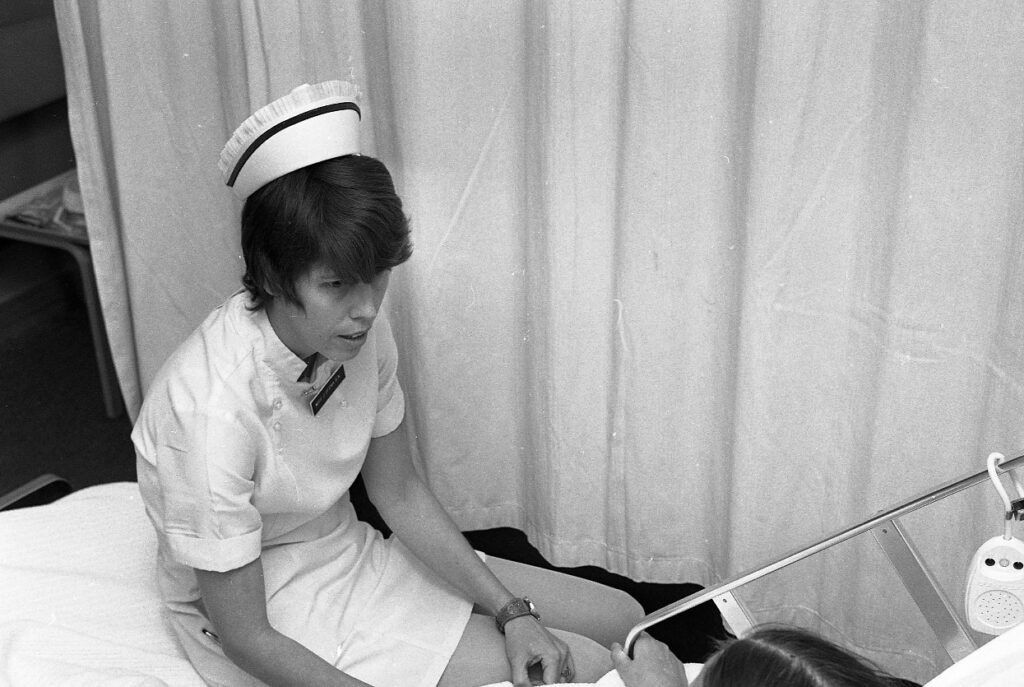
1990 – Joy Ufema Counsel established York House Hospice, in York, PA, one of just a few hospices around the country dedicated to end of life care for AIDS patients. Ufema was the first specialist in the nation to conceptualize and implement hospice care, known as a nurse-thanatologist. She was the subject of a television movie, A Matter of Life and Death, starring Linda Lavin.
1993 – The U.S. Congress passed, and President Bill Clinton signed “Don’t Ask Don’t Tell” that allowed gay and lesbian people to serve in the military. They would not be asked their sexual orientation during enlistment screening.
1996 – Romer v. Evans Supreme Court Case. The Court ruled in a 6–3 decision that a state constitutional amendment in Colorado preventing protected status based upon homosexuality or bisexuality did not satisfy the Equal Protection Clause of the U.S. Constitution.
1997 – Ellen DeGeneres, a comedian, TV actor and television host was one of the first popular entertainers who publicly came out as a lesbian during an interview on the Oprah Winfrey show and then became the first openly gay character on the TV show, “Ellen.” She was then highlighted on the cover of Time Magazine and other news organizations.
1998 – Matthew Shepard, a 21-year-old student at the University of Wyoming, was brutally attacked and tied to a fence in a field outside of Laramie, WY and left to die because he was gay. He died from his wounds several days later. This was one of the most notorious anti-gay hate crimes in America and resulted in a federal law passed 10 years later in 2009 called the “Hate Crimes Prevention Act”, a federal law against bias crimes directed at lesbian, gay, bisexual or transgender people.
1999 – The Transgender Day of Remembrance was created by Gwendolyn Ann Smith, an American transgender woman to memorialize the murder of transgender woman Rita Hester in Massachusetts. The event is held each year on November 20.